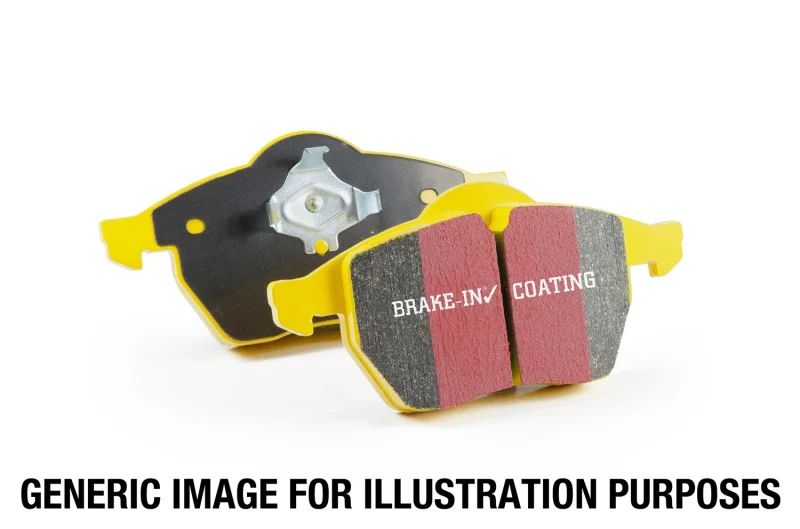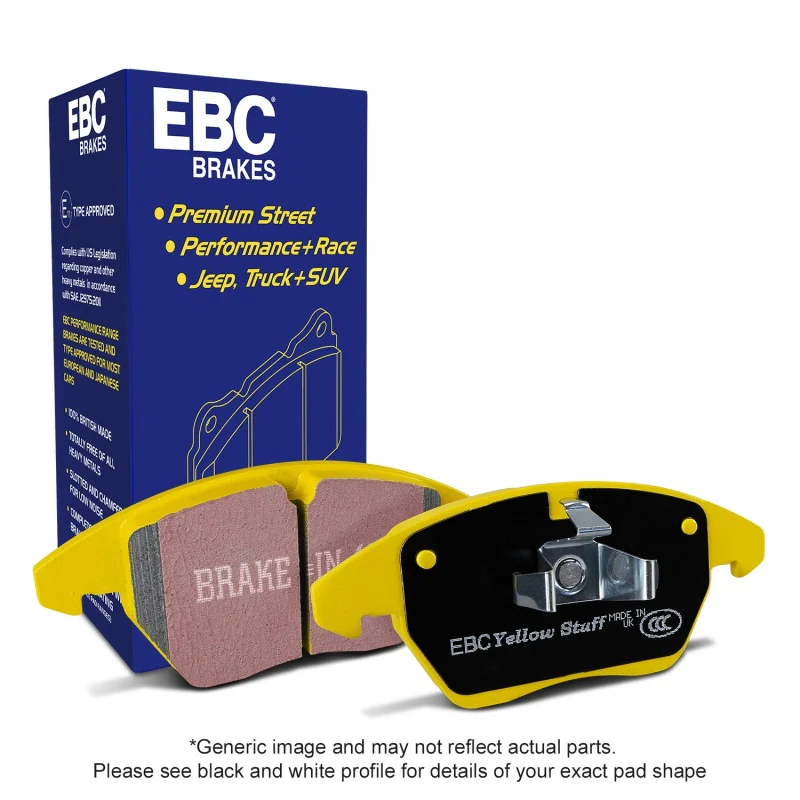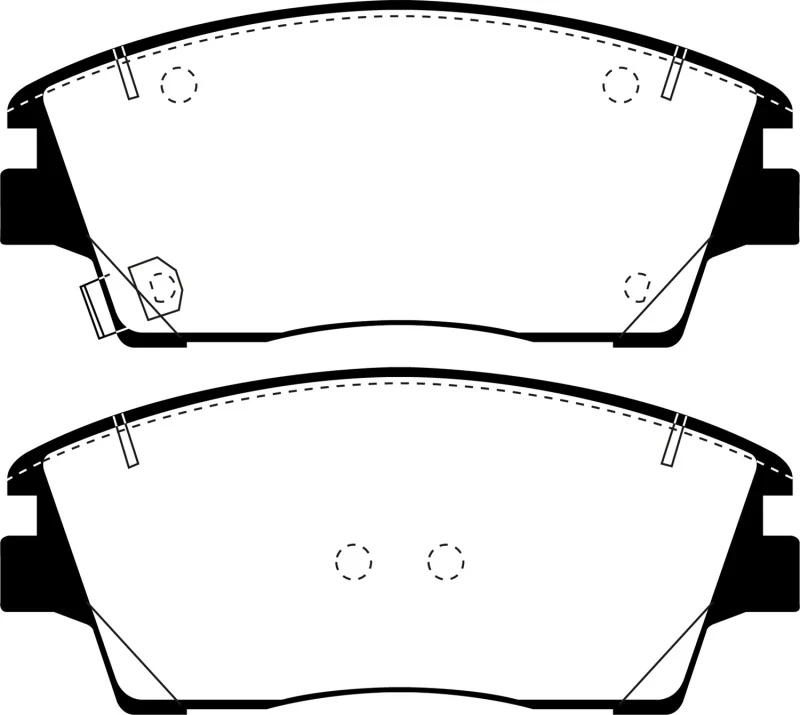

EBC 93-97 Aston Martin DB7 3.2 Supercharged Yellowstuff Front Brake Pads
YellowStuff Brake Pads use a high-friction aramid performance compound engineered for Aston Martin. This is a compound we recommend for aggressive street driving and light track-style heat events—with stable pedal feel and consistent response when braking loads rise.
High-end performance cars demand precise modulation and thermal control—pad friction stability matters. Compared with many factory pad formulations, this compound typically delivers higher friction levels and improved fade resistance when installed correctly and bedded-in properly.
Features & Benefits
- Increased braking torque vs typical OEM pads
- Stable friction characteristics across a broad temperature range
- Improved resistance to fade under repeated braking
- Predictable pedal feel with progressive modulation
- Compatible with OEM and performance replacement rotors
- Bedding-in required to establish a consistent transfer layer
Best For
Best performance street compound for Aston Martin drivers who want precise modulation and fade resistance without compromising day-to-day drivability.
Common Questions
Are these better than factory brake pads?
In most applications, yes. Expect stronger bite and improved fade resistance, especially during repeated stops. Final results depend on rotor condition and proper bedding.
Do I need to bed these pads in?
Yes. Bedding is critical to build a stable transfer layer on the rotor and to achieve the friction and consistency the compound is designed for.
Will they make noise or dust?
All performance pads can produce some noise and dust depending on the vehicle and installation. Correct bedding and clean hardware help minimize both.
| Year | Make | Model | Submodel |
|---|---|---|---|
| 1997-1998 | Aston Martin | DB7 | Base |
| 1997-1998 | Aston Martin | DB7 | Volante |
| 1979-1989 | Aston Martin | Lagonda | Base |
| 1987-1988 | Aston Martin | Zagato | Base |
| 1975-1976 | Jaguar | XJ12 | C |
| 1975-1979 | Jaguar | XJ12 | L |
| 1974,1981-1987 | Jaguar | XJ6 | Base |
| 1975-1977 | Jaguar | XJ6 | C |
| 1975-1980 | Jaguar | XJ6 | L |
| 1993 | Jaguar | XJRS | Base |
| 1994-1996 | Jaguar | XJS | 2+2 |
| 1976-1990,1992-1995 | Jaguar | XJS | Base |
| 1987-1988 | Jaguar | XJS | C |
| 1990-1991 | Jaguar | XJS | Classic Collection |
| 1989-1990 | Jaguar | XJS | Collection Rouge |
YellowStuff Brake Pads use a high-friction aramid performance compound engineered for Aston Martin. This is a compound we recommend for aggressive street driving and light track-style heat events—with stable pedal feel and consistent response when braking loads rise.
High-end performance cars demand precise modulation and thermal control—pad friction stability matters. Compared with many factory pad formulations, this compound typically delivers higher friction levels and improved fade resistance when installed correctly and bedded-in properly.
Features & Benefits
- Increased braking torque vs typical OEM pads
- Stable friction characteristics across a broad temperature range
- Improved resistance to fade under repeated braking
- Predictable pedal feel with progressive modulation
- Compatible with OEM and performance replacement rotors
- Bedding-in required to establish a consistent transfer layer
Best For
Best performance street compound for Aston Martin drivers who want precise modulation and fade resistance without compromising day-to-day drivability.
Common Questions
Are these better than factory brake pads?
In most applications, yes. Expect stronger bite and improved fade resistance, especially during repeated stops. Final results depend on rotor condition and proper bedding.
Do I need to bed these pads in?
Yes. Bedding is critical to build a stable transfer layer on the rotor and to achieve the friction and consistency the compound is designed for.
Will they make noise or dust?
All performance pads can produce some noise and dust depending on the vehicle and installation. Correct bedding and clean hardware help minimize both.
| Year | Make | Model | Submodel |
|---|---|---|---|
| 1997-1998 | Aston Martin | DB7 | Base |
| 1997-1998 | Aston Martin | DB7 | Volante |
| 1979-1989 | Aston Martin | Lagonda | Base |
| 1987-1988 | Aston Martin | Zagato | Base |
| 1975-1976 | Jaguar | XJ12 | C |
| 1975-1979 | Jaguar | XJ12 | L |
| 1974,1981-1987 | Jaguar | XJ6 | Base |
| 1975-1977 | Jaguar | XJ6 | C |
| 1975-1980 | Jaguar | XJ6 | L |
| 1993 | Jaguar | XJRS | Base |
| 1994-1996 | Jaguar | XJS | 2+2 |
| 1976-1990,1992-1995 | Jaguar | XJS | Base |
| 1987-1988 | Jaguar | XJS | C |
| 1990-1991 | Jaguar | XJS | Classic Collection |
| 1989-1990 | Jaguar | XJS | Collection Rouge |
Original: $210.05
-65%$210.05
$73.52Description
YellowStuff Brake Pads use a high-friction aramid performance compound engineered for Aston Martin. This is a compound we recommend for aggressive street driving and light track-style heat events—with stable pedal feel and consistent response when braking loads rise.
High-end performance cars demand precise modulation and thermal control—pad friction stability matters. Compared with many factory pad formulations, this compound typically delivers higher friction levels and improved fade resistance when installed correctly and bedded-in properly.
Features & Benefits
- Increased braking torque vs typical OEM pads
- Stable friction characteristics across a broad temperature range
- Improved resistance to fade under repeated braking
- Predictable pedal feel with progressive modulation
- Compatible with OEM and performance replacement rotors
- Bedding-in required to establish a consistent transfer layer
Best For
Best performance street compound for Aston Martin drivers who want precise modulation and fade resistance without compromising day-to-day drivability.
Common Questions
Are these better than factory brake pads?
In most applications, yes. Expect stronger bite and improved fade resistance, especially during repeated stops. Final results depend on rotor condition and proper bedding.
Do I need to bed these pads in?
Yes. Bedding is critical to build a stable transfer layer on the rotor and to achieve the friction and consistency the compound is designed for.
Will they make noise or dust?
All performance pads can produce some noise and dust depending on the vehicle and installation. Correct bedding and clean hardware help minimize both.
| Year | Make | Model | Submodel |
|---|---|---|---|
| 1997-1998 | Aston Martin | DB7 | Base |
| 1997-1998 | Aston Martin | DB7 | Volante |
| 1979-1989 | Aston Martin | Lagonda | Base |
| 1987-1988 | Aston Martin | Zagato | Base |
| 1975-1976 | Jaguar | XJ12 | C |
| 1975-1979 | Jaguar | XJ12 | L |
| 1974,1981-1987 | Jaguar | XJ6 | Base |
| 1975-1977 | Jaguar | XJ6 | C |
| 1975-1980 | Jaguar | XJ6 | L |
| 1993 | Jaguar | XJRS | Base |
| 1994-1996 | Jaguar | XJS | 2+2 |
| 1976-1990,1992-1995 | Jaguar | XJS | Base |
| 1987-1988 | Jaguar | XJS | C |
| 1990-1991 | Jaguar | XJS | Classic Collection |
| 1989-1990 | Jaguar | XJS | Collection Rouge |